
The Holy Maid’s Political Network
Wolf HallThis thread traces how Elizabeth Barton’s prophecies become a channel for opposition, then are dismantled through investigation and public confession.
increasing Bearing strength in each event
 decreasing
Bearing strength in each eventdecreasingVisions Become Influence
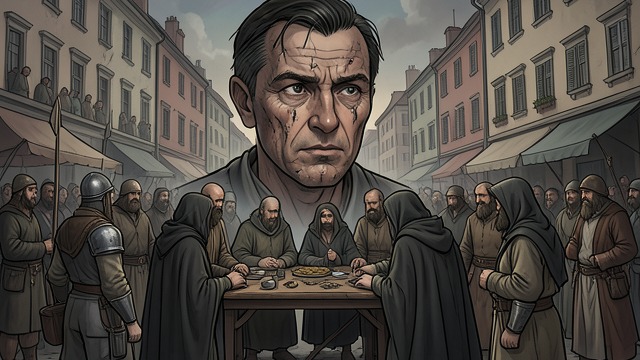
A Countrywoman’s Authority
A reputation grows
Elizabeth Barton’s visions attract clerics, pilgrims, and noble patrons. Her claims about the king’s marriage and future draw attention from those opposed to Anne Boleyn’s rise.
A network forms
Religious houses and influential visitors give Barton a reach beyond her own village. Cromwell suspects that her prophetic authority is being directed toward political ends.
Investigation at Lambeth
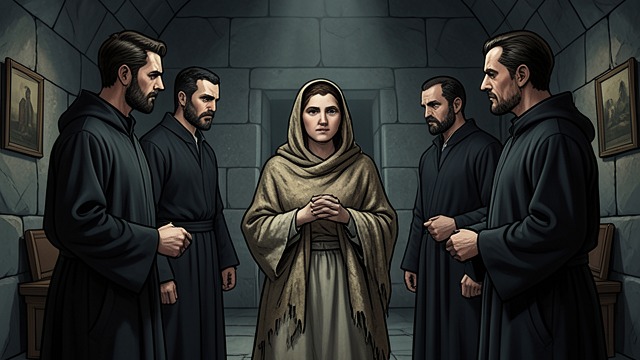
Prophecy Examined
Questions and contradictions
Cromwell, Cranmer, Audley, and Riche question Barton about her visions, supporters, and predictions. She claims that devils appear to her and that the king will lose power.
Evidence of political danger
Her statements connect her to figures who oppose the new succession. The investigators see both a vulnerable woman and a network whose claims can mobilize resistance.
Confession and Punishment
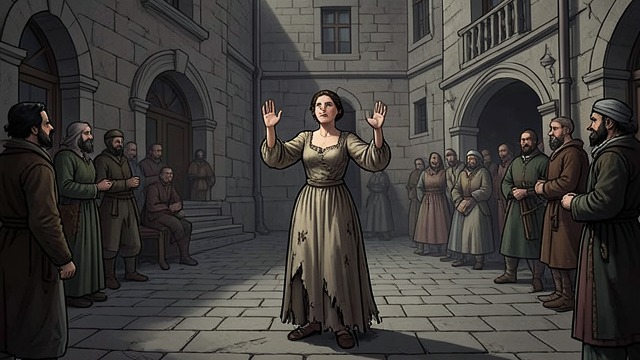
The Prophetess Unmade
Public recantation
Barton admits that her visions and miracles were inventions shaped by pressure from followers. She performs public penance, while Cromwell continues tracing the clerical and noble connections around her.
The state’s answer
An attainder targets Barton and supporters. She is executed, and the affair establishes how prophecy that challenges royal authority can be recast as treason.
1526–1532
Autumn 1533
1533–1534
